
Stacie’s return to safety and joy after addiction
Published Oct. 27, 2026
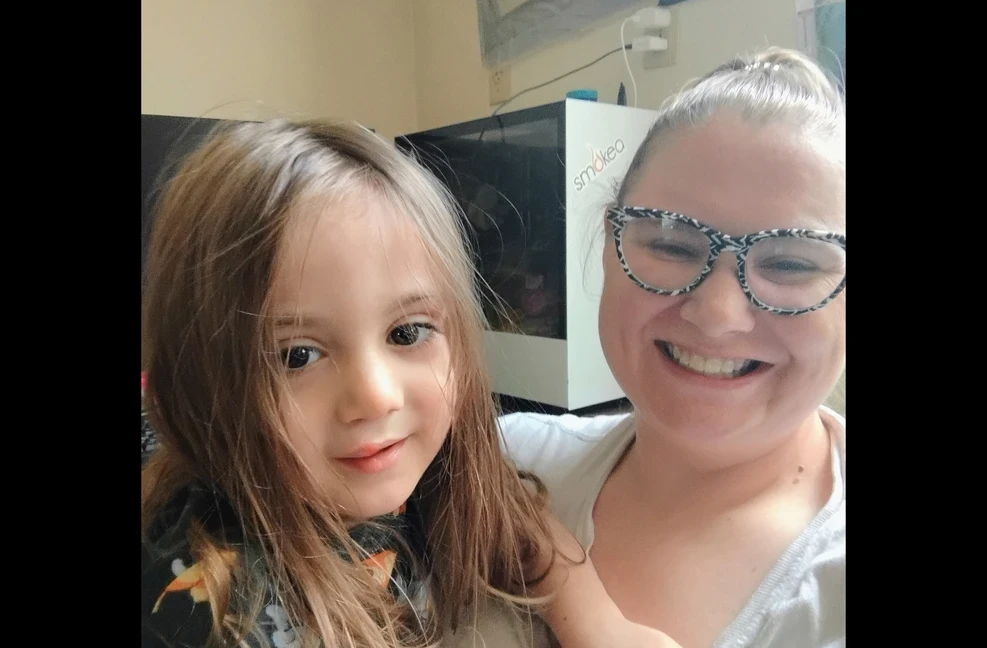
In recovery, Stacie has grown to appreciate the quiet. She lives in a small, secluded town in South Dakota with her partner and young son.
“The neighborhood keeps each other safe,” she said. “For recovery, it really works.”
But feeling safe with her thoughts and feelings wasn’t easy, and it didn’t happen overnight.
“Society paints this picture that once you get off drugs, your life gets instantaneously better, but it’s painstakingly slow, all of it,” she said. “Trying to figure out who I am has been the hardest.”
It’s taken time for Stacie to come back to cooking and other interests that once brought her joy.
“I kind of forgot how to do a lot of things,” she said. “A lot of it has to do with me getting sober. It’s probably taking my brain a little while to recover.”
Stacie has already learned a lot about herself. She’s more patient than she thought. She’s not as socially anxious. And she’s rediscovering her leadership strengths at work.
“I’m surprisingly optimistic. I used to think of myself being negative and this and that, but I’m finding out I’m not really any of those things,” she said. “And I have a knack for helping other people more than I know how to help myself.”
Ten days
Less than two weeks into sobriety, Stacie sought medication assisted treatment Coteau des Prairies Health Care Systems in Sisseton, South Dakota, but she wasn’t able to get her first dose.
“They told me I’d have to come back Monday, and I was freaking out a little bit,” she said. “Shannon and Chantel walked by, and the nurse said, ‘You were who I was hoping I would run into.’ We went and talked for an hour.”
Both coaches made Stacie feel encouraged and comfortable, and they offered to provide ongoing, peer-based care throughout her journey.
“I had already been sober 10 days, but 10 days is not a long time when you’ve been using drugs for five, 10 years,” she said. “They were the ones who said, ‘You can do it, we know you can do it.’”
The three women exchanged stories. They joked and laughed. That genuine connection and care is exactly what Stacie needed at the time.
“Sometimes, it feels like I’m the biggest failure on the planet. But they didn’t treat me that way,” she said. “Luckily, they were there that day.”
As Stacie continued meeting with Chantel, she felt seen. She loved talking with someone who knew, firsthand, what she had been through.
“Honestly, she just made me feel better on a lot of the days I would talk to her,” she said. “I’d think, ‘I’m having a bad day, but I get to talk to Chantel, so I’m going to be fine.’”
When Chantel left Face It TOGETHER for another position, Stacie started to meet with Shannon again. She said Shannon helped her navigate and improve her relationships.
“Shannon has helped me learn how to look at relationships more positively,” she said. “She puts things in perspective, and she makes me think differently. She’s getting me places.”
The changes Stacie is observing in herself are also taking place in her immediate family.
“The whole family is getting sober,” she said. “It’s ground that no one has ever covered; we’ve never done this before.”
Family addiction
Stacie wouldn’t describe her childhood as bad, but it was chaotic.
“What I was subjected to and saw all the time was alcohol. Just drinking, drinking, drinking,” she said. “My dad would have house parties, and I got to the point where I was so used to falling asleep with really loud music. For years and years, I couldn’t fall asleep without the TV on.”
When Stacie was a teenager, her parents moved to a new city and began to struggle with crack.
“They were selling the furniture out of our house,” she said. “We moved like four times in four months. Every time rent was due, we’d move.”
Stacie’s drug use followed a similar trajectory, starting with alcohol and eventually leading to meth once she was 30. She found out her long-term partner at the time was using it, so she decided to try it.
“About three months later, he got shot and killed by the police,” she said. “I was alone and addicted to meth, and it just kind of spiraled from there.”
At the time, Stacie didn’t see any reason to get better. The trauma and grief of her partner’s death followed her for a long time.
“I tried to downplay it so it didn’t hurt as much. I acted like it didn’t affect me. But it’s why I kept doing drugs,” she said. “It was a big turning point of my drug use. I kind of stopped caring about myself, even my safety. I was doing questionable things.”
About five years later, Stacie found out she was pregnant.
“It wasn’t difficult for me to stop while I was pregnant. But after I had him, I swear it was like the next day I was doing drugs again,” she said. “I went right back as soon as soon as he was safe.”
Another turning point came when Stacie was arrested.
“That’s what threw my sobriety onto a fast track,” she said.
By that point, Stacie had wanted to get sober for years. She decided to explore her options at Coteau, which led to her serendipitous meeting with Chantel and Shannon.
Stacie considers herself lucky to have had such great peer coaches. That doesn’t mean she hasn’t struggled.
“Yes, you can get a lot of motivation from your peers, but I’d have to say at least 75% of the hard, hard work has to come from yourself,” she said. “There’s no pills, no other drugs you can substitute to make this easier.”
Play and peace
As Stacie moves further out of the addiction fog, she gets to be fully present with her son.
“Now I get to see all of the goofy things he does,” she said. “Luckily, he was still super little when I finally got off drugs. I’m thankful for that.”
Sometimes when Stacie drives to work, she’s still surprised that she’s sober. She loves playing karate with her son and chatting with her neighbors. She takes lots of pictures.
“If you’ve never been through healthy growth and processing, when you start having feelings, you’re like, ‘What do I do with this?’ But it starts feeling better,” she said. “We’re such adaptable creatures. We start adapting our minds into a new normal. You raise your own bar without even knowing it.”